
Overview#
You can integrate Microsoft Teams notifications to receive real-time updates on status changes during file transfer tasks.
After completing the integration, notification messages are automatically sent to the designated Teams channel whenever designated events occur, such as a transfer being Started, Completed, or Failed.
The entire process consists of two steps: ① Obtain a Webhook URL from Teams → ② Configure notifications in the product.
Prerequisites#
Before you begin, check the following.
| Item | Description |
|---|---|
| Microsoft Teams | An account with permission to create workflows is required. |
| Target channel | Prepare the team (Team) and channel (Channel) that will receive notifications in advance. |
| Network | Outbound HTTPS (443) communication to the Teams workflow Webhook Endpoint must be allowed from the environment where the product is installed. |
Obtain a Teams Webhook URL#
To receive notifications in Teams, obtain a Webhook URL for receiving external messages from the Workflows(Power Automate) app.
Step 1. Open Workflows from the Channel#
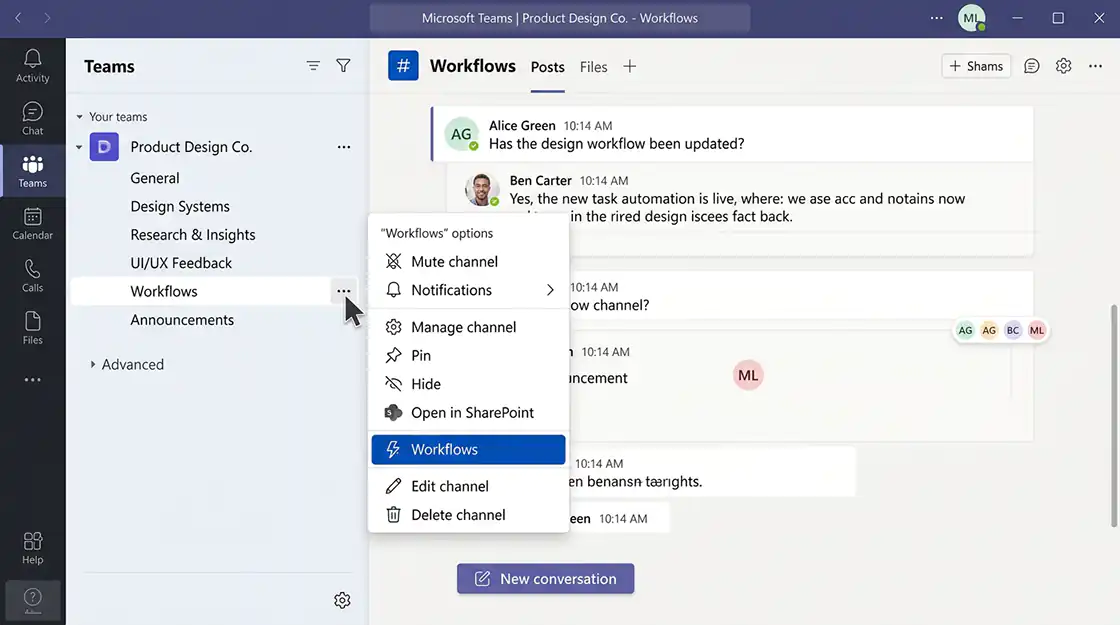
In Teams, open the More options(⋯) menu next to the channel that will receive notifications and select Workflows.
Alternatively, you can open the Workflows app directly from the app list on the left and create a new workflow.
Step 2. Select a Webhook Template#
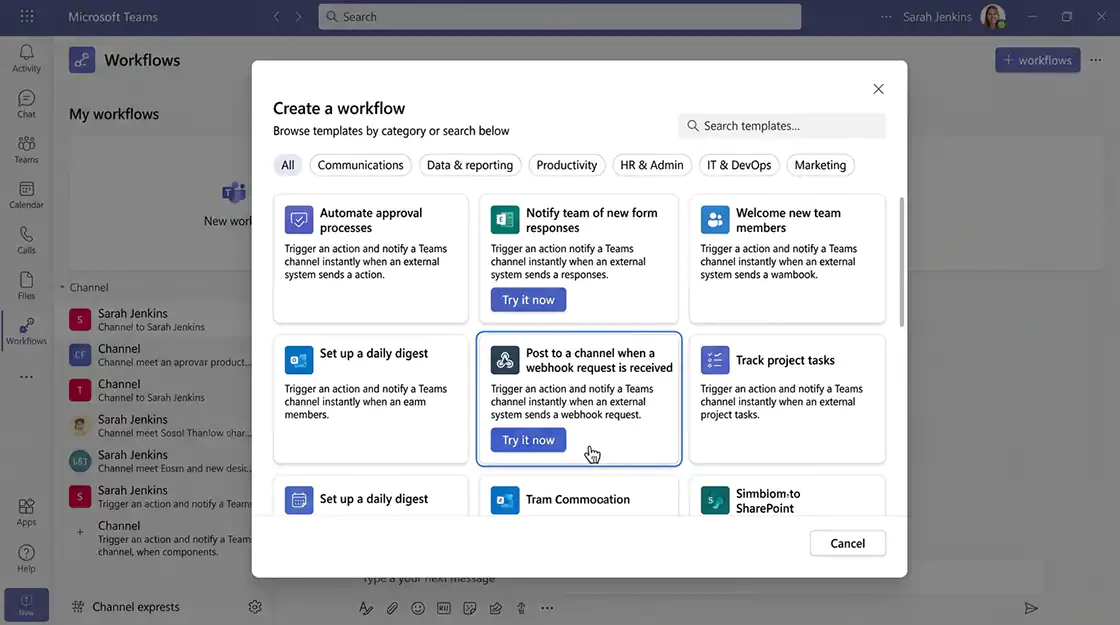
Select the Post to a channel when a webhook request is received(Post to a channel when a webhook request is received) template.
Step 3. Name the Workflow and Sign In#
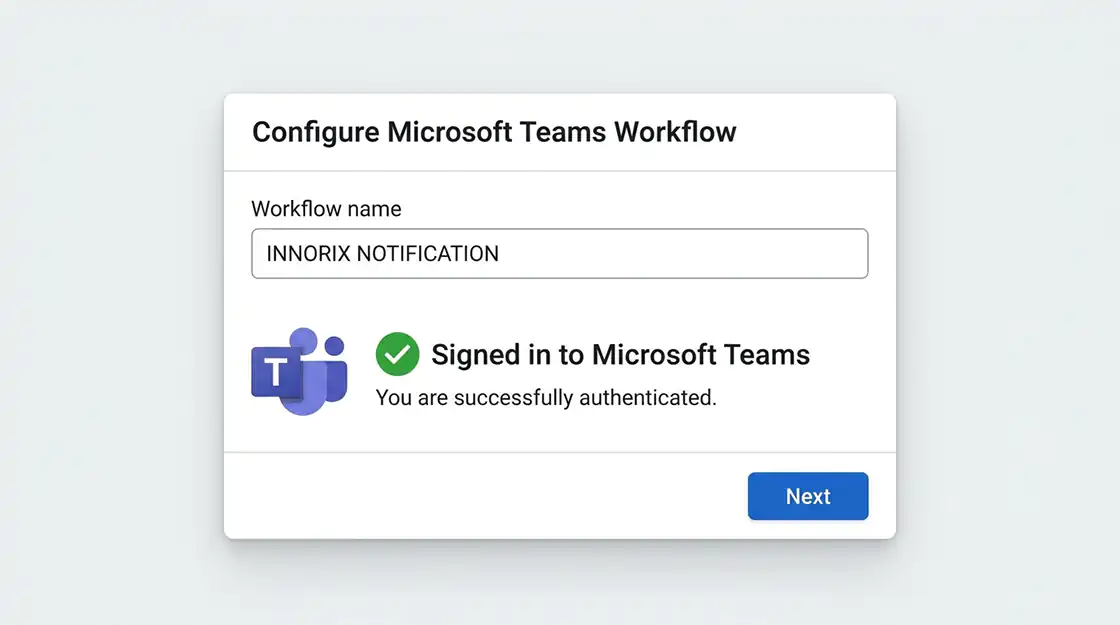
Enter a workflow name. (Example: INNORIX NOTIFICATION)
After authenticating with your Microsoft account, check whether a green check mark appears next to the Teams icon and click Next.
Step 4. Select the Team and Channel#
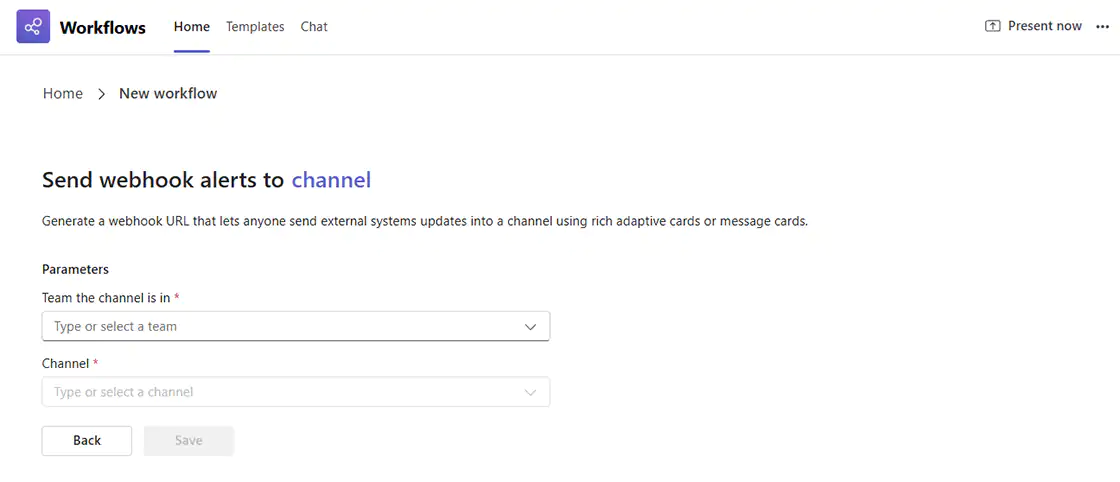
Select the Team and Channel where notifications will be posted, then click Add workflow.
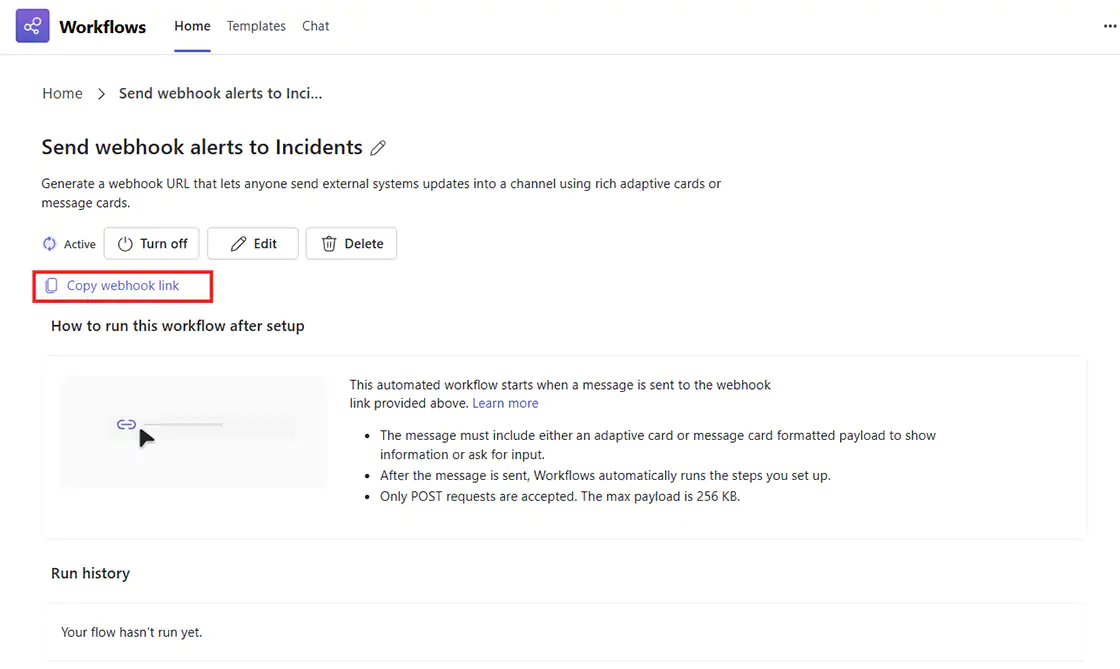
Step 5. Copy the Webhook URL#
Copy the generated Webhook URL and then click Done.
ℹ️ A Webhook URL is sensitive information, similar to a password. Anyone who knows the URL can send messages to the channel, so make sure it is not exposed in public repositories or external documents.
If you were unable to copy the URL, you can open the workflow in the Workflows app and check it again in the When a Teams webhook request is received step.
Checklist#
- ✔ The workflow has been created.
- ✔ The target team and channel have been selected.
- ✔ The Webhook URL has been copied.
Teams Notification Settings#
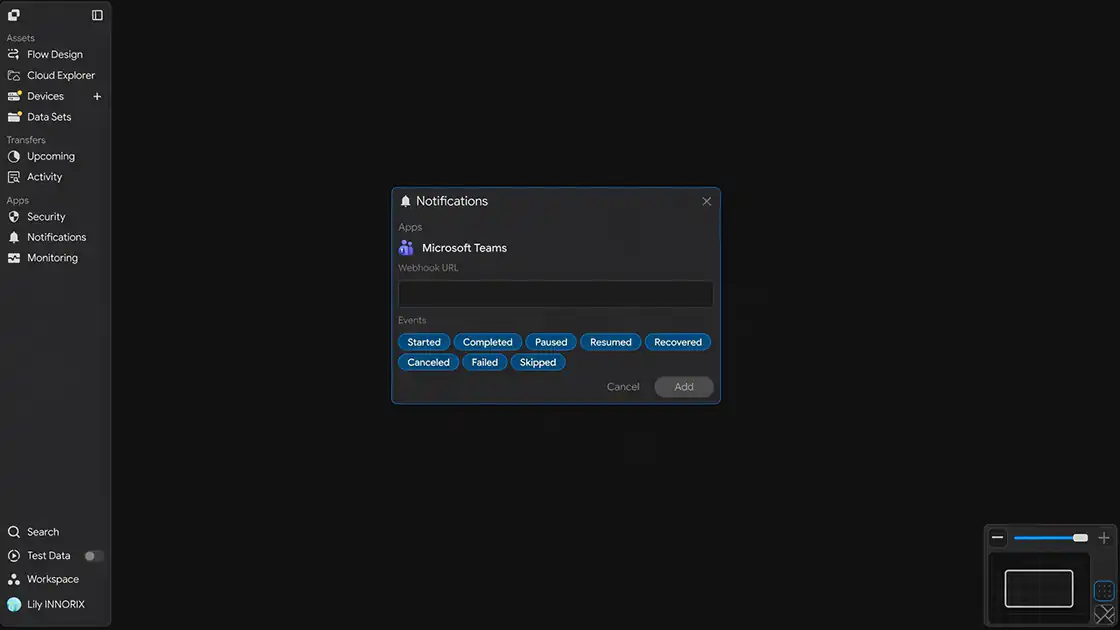
Enter the issued Webhook URL in the product's notification settings.
When you open the Notifications settings window, the following screen is displayed.
Step 1. Enter the Webhook URL#
Paste the copied URL into the Webhook URL field.
Step 2. Select Notification Events#
Select the events for which you want to receive notifications under Events.
You can select multiple events, and messages are sent only when the selected events occur.
| Event | When It Occurs |
|---|---|
| Started | When the transfer task starts |
| Completed | When the transfer is completed successfully |
| Paused | When the transfer is temporarily paused |
| Resumed | When a paused transfer starts again |
| Recovered | When the transfer is automatically recovered and resumed after an interruption or error |
| Canceled | When the user cancels the transfer |
| Failed | When the transfer fails |
| Skipped | When a specific file is skipped (Example: an existing file or a file matching a filter condition) |
Step 3. Save the Settings#
After completing the input, click Add to save the integration.
Checklist#
- ✔ The Webhook URL has been entered.
- ✔ The events for which notifications will be received have been selected.
Verify the Integration#
Verify that the settings are working correctly.
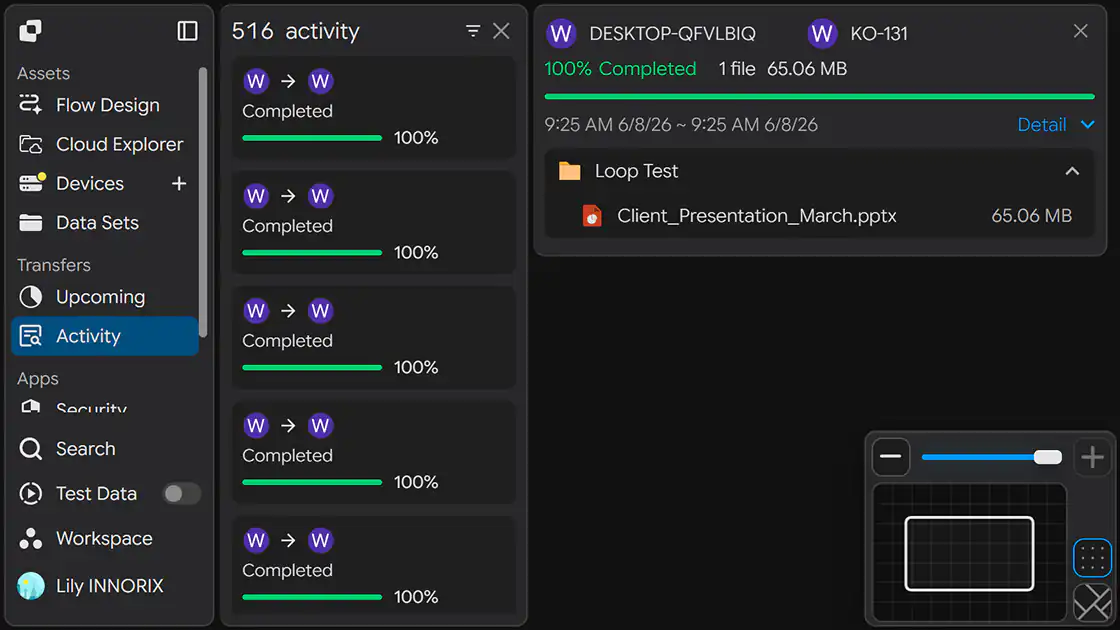
Step 1. Trigger a Test Event#
Run an actual transfer task or trigger one of the selected events.
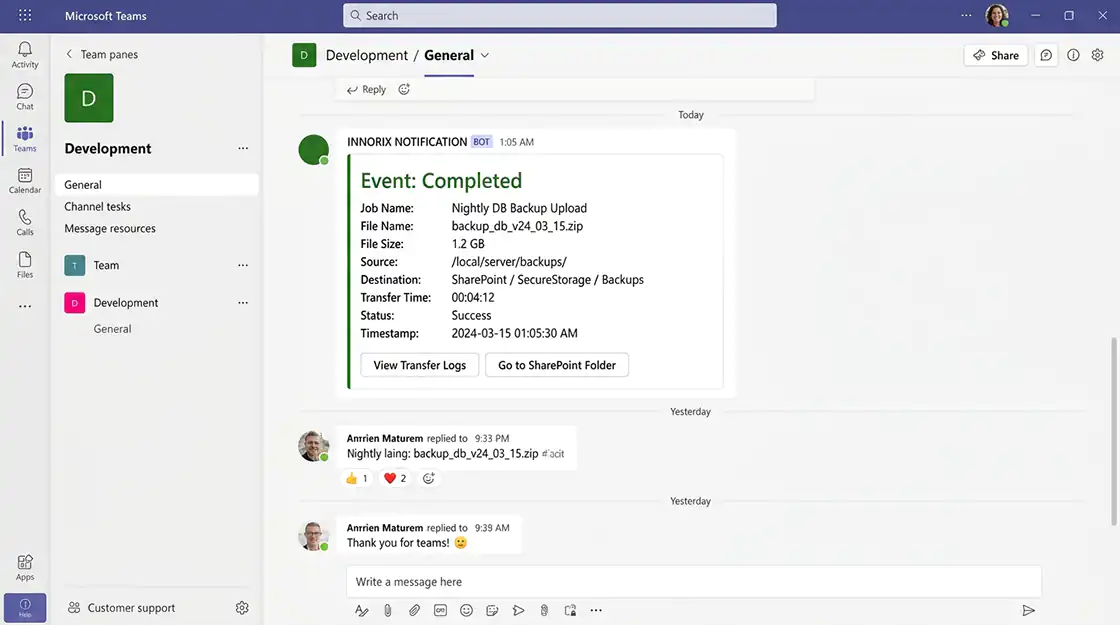
Step 2. Check the Teams Channel#
Check whether a notification message has arrived in the designated Teams channel.
Checklist#
- ✔ A notification has arrived in the Teams channel.
- ✔ The triggered event was delivered accurately.
Setup Complete#
Once the settings are saved, the integration is applied.
After that, notification messages are automatically sent to the designated Teams channel whenever the selected events occur.
Troubleshooting#
If notifications do not arrive, check the following items.
| Issue | What to Check |
|---|---|
| No notifications are received at all | Check whether the Webhook URL was entered correctly (including leading or trailing spaces and missing characters). |
| The workflow does not run | Check whether the workflow is On in the Workflows app. |
| Notifications do not arrive in a private channel | Check whether the workflow is configured to post to the channel and whether private channels are supported. |
| Notification failure in a closed network | Check whether outbound HTTPS (443) communication to the Teams workflow Endpoint is allowed by the firewall or proxy. |