Getting Started
Core Concepts
Deploy a single file consistently to multiple destination locations
Installation files, update files, documents, data, and result files used in daily operations are often shared across multiple teams and systems.
Automated file deployment connects files prepared at a single Source to multiple Targets, automatically applying the required files to each destination.
For example, you can deploy an installation file prepared at headquarters to servers at multiple branches, or apply a new data file to several processing environments at the same time.
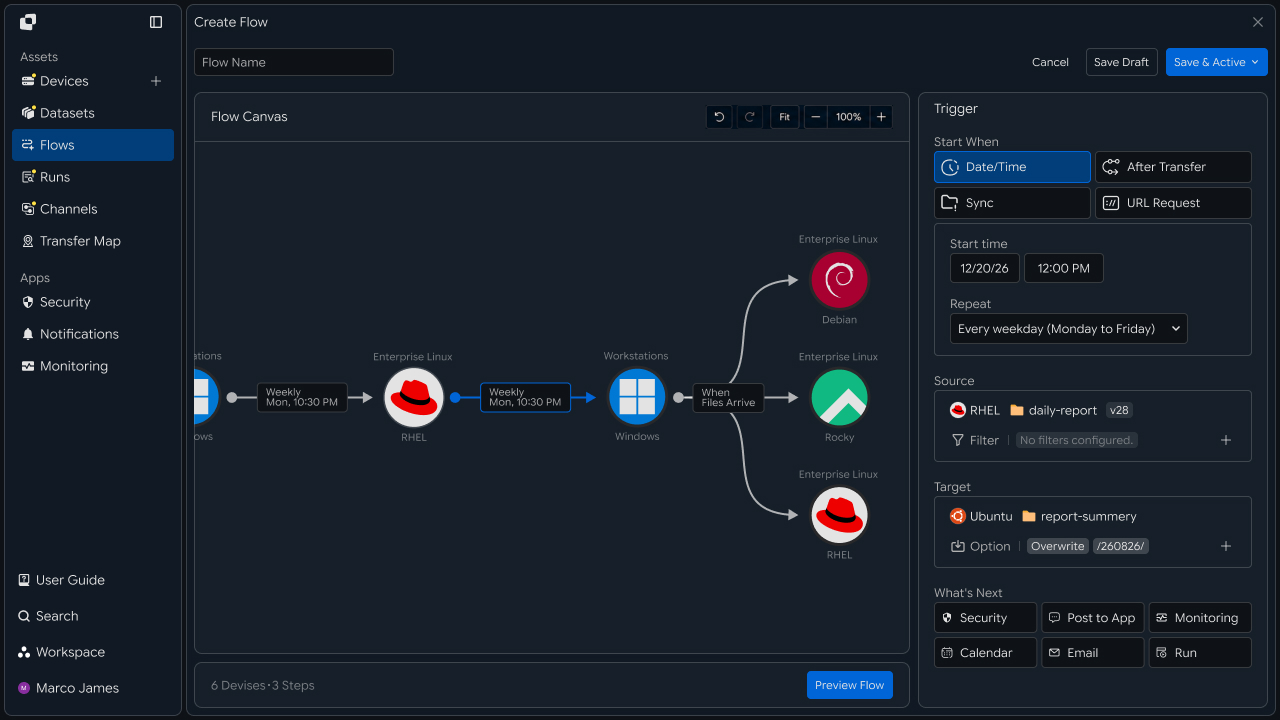
By building a deployment flow around a single file and multiple destinations, each work environment can use the files it needs based on the same standard.
Deployment Flow
Automatically connect everything from file preparation to deployment across multiple locations
Automated file deployment prepares the files to deploy, configures multiple destinations that will receive them, and runs the deployment according to the specified conditions.
① Prepare Files for Deployment
↓
② Configure Deployment Targets
↓
③ Check Deployment Conditions
↓
④ Transfer Files to Each Target
↓
⑤ Apply Files at Each Location
↓
⑥ Check Results
When files are ready at the Source, they are transferred to multiple Targets according to the configured Flow and applied so they can be used at each destination.
This flow connects a single file to multiple business environments and systems, creating a continuous file flow from deployment through use.
Business Impact
Reduce repetitive file transfer and deployment work
When the same file is used by multiple teams or systems, preparing and transferring the file to each destination becomes repetitive.
With automated file deployment, you can connect one Source file to multiple Targets and automatically deploy the file to multiple locations according to configured conditions.
Before and After Deployment
| Category | Individual File Management | Automated File Deployment |
|---|---|---|
| File Preparation | Prepare files for each target | Prepare a single Source file |
| Target Selection | Select each location separately | Configure multiple Targets in a single Flow |
| File Transfer | Run a separate transfer for each target | Automatically deploy according to configured conditions |
| File Use | Start work after the file arrives | Start work immediately at the required location |
In this way, automated file deployment connects a single file with multiple business environments.
By configuring regularly deployed files or materials shared across multiple environments as an automated deployment flow, you can connect everything from file preparation to actual use in each business operation.
Business Teams
Business teams focus on checking deployed files at the required work location and using them immediately.
Latest Files
Use deployed files immediately at the work location
When files are deployed to multiple teams or work environments, each person can find the files needed for current work at their own working location.
For example, when a new business document or processing result is deployed, each team can find it in its workspace or designated folder and continue working immediately.
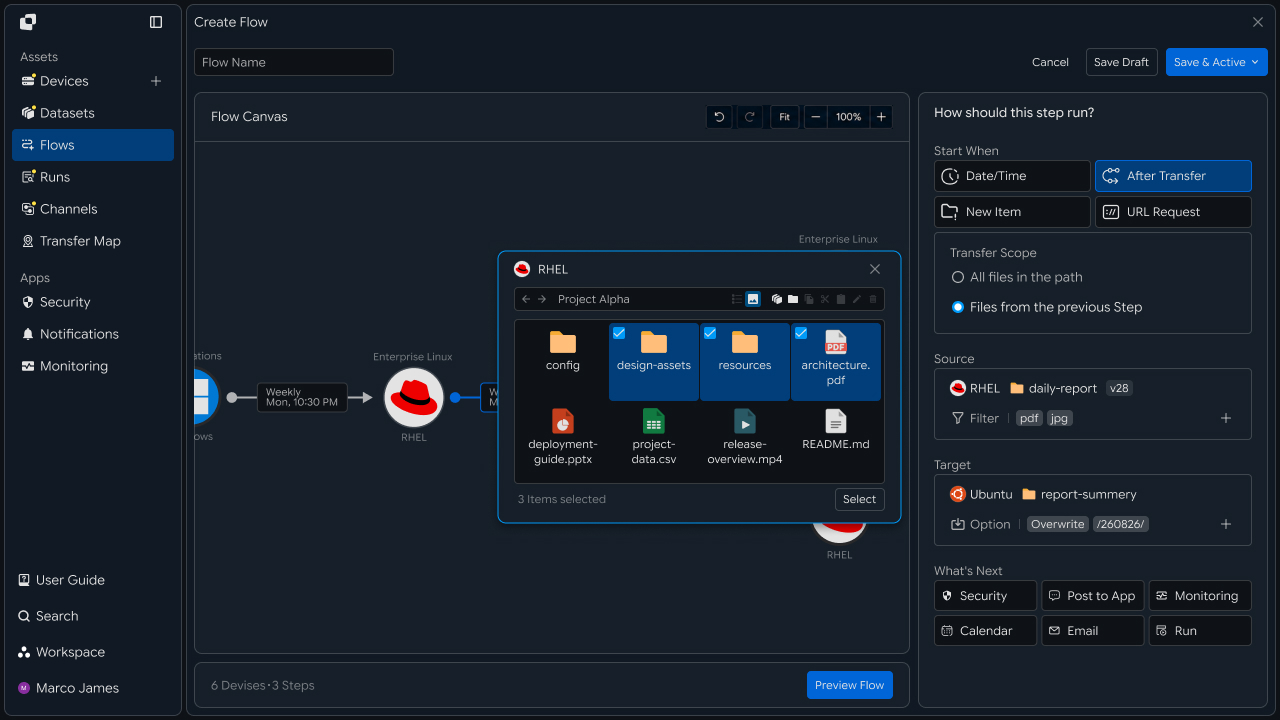
The following information can be reviewed.
| Review Item | Use |
|---|---|
| File Name | Identify the file currently needed for work |
| File Version | Confirm the latest business version |
| Modified Time | Check when the file was changed |
| Deployment Time | Confirm the currently deployed file |
| File Location | Find where the file is used for work |
Reviewing deployed file information lets teams start work immediately using the files required for the current task.
Team-Specific Use
Continue using deployed files according to each team's work
Even when the same file is deployed to multiple teams, each team can use it according to its own workflow.
For example, when the content production team prepares a result file, it can be deployed to the review and operations teams' workspaces, allowing each team to continue the next task using the deployed file.
File Preparation
    ↓

Production Team
    ↓

Review Team
    ↓

Operations Team
    ↓

Follow-up Work
Connecting one file to multiple teams' work environments reduces the file preparation work for each team and lets them use the required files immediately.
Business Workflow Connection
Continue the next task based on the deployed file
Once a file is applied at the required location, teams can proceed with the next task, such as review, installation, analysis, or approval.
For example, when result data is deployed to an analysis environment, the responsible team can start analysis using that data. When an installation file is applied to a server, the operations team can continue the next task based on the deployed file.
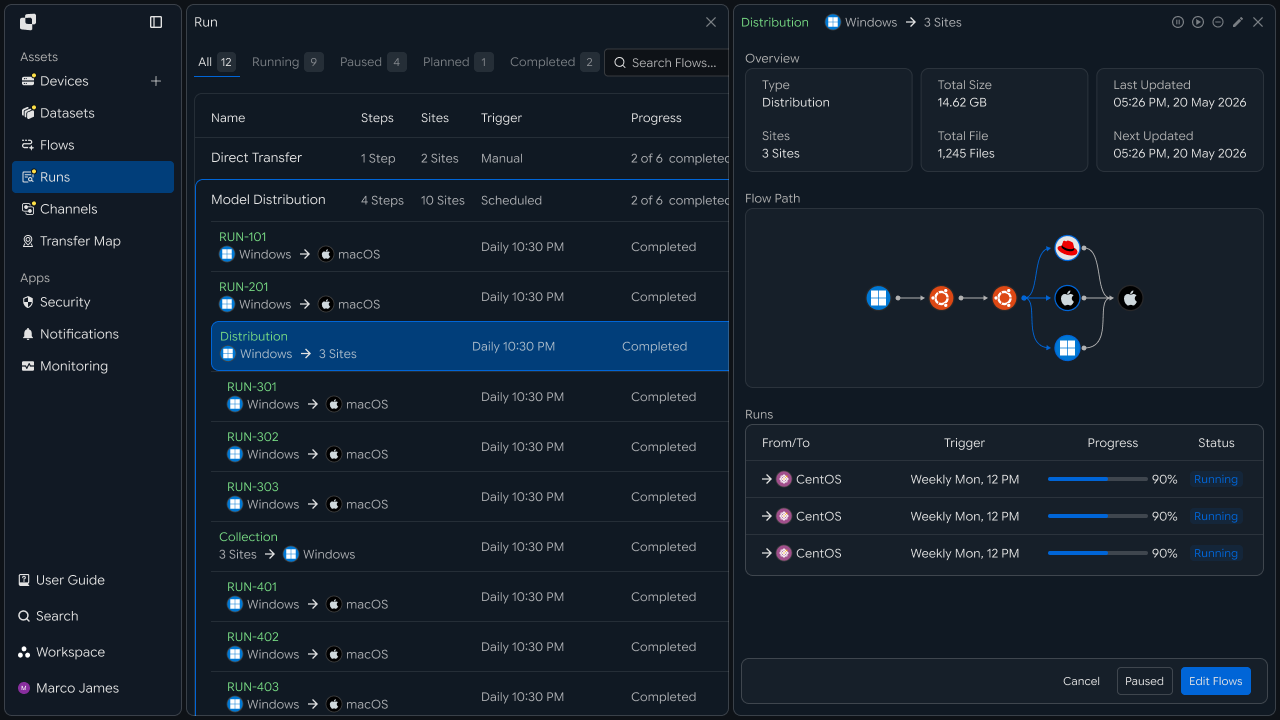
Connecting file deployment with follow-up work lets users check the required file and immediately continue the next task.
IT Engineers
IT engineers focus on building the deployment structure, configuring execution conditions and file handling policies, and operating deployment status across multiple targets.
Deployment Environment
Connect the file source with multiple deployment locations
To configure automated file deployment, first connect the Source containing the files to deploy with the multiple Targets that will receive them.
The Source manages the files used as the deployment baseline, while Targets can be configured as team workspaces, branch systems, servers, devices, or other locations where the files will be used.
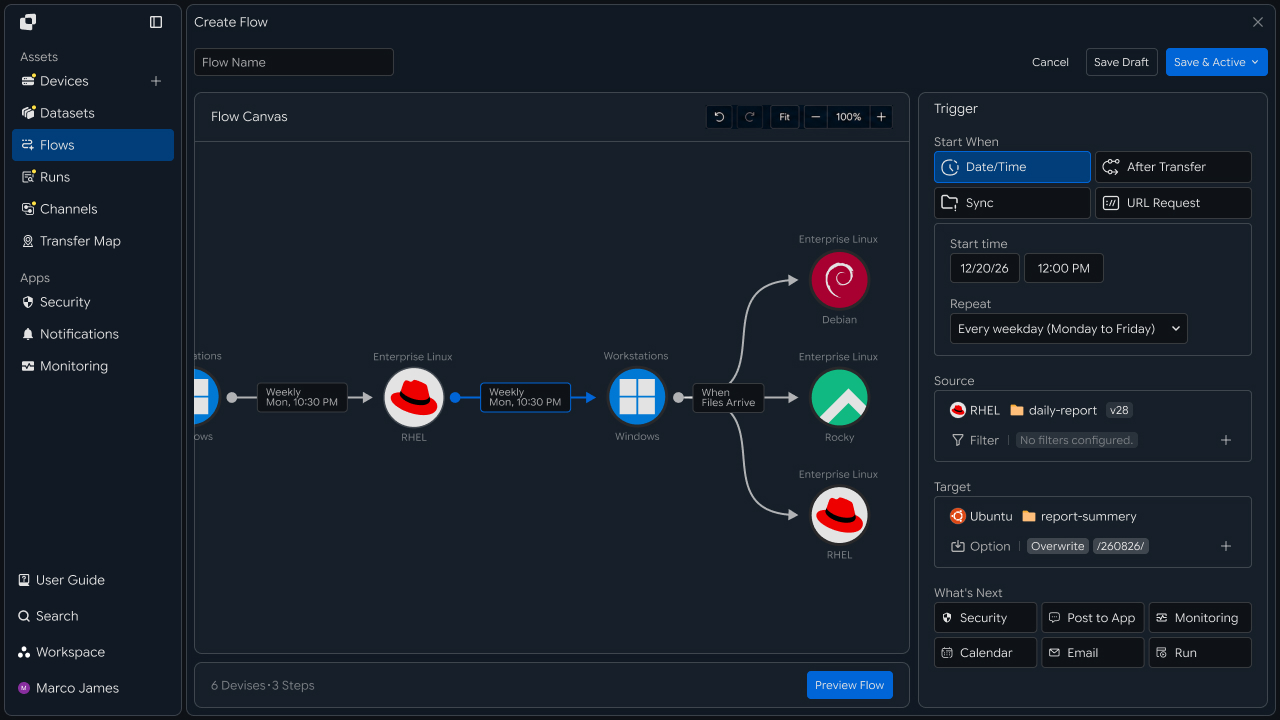
Configure the systems and file paths to use for each Source and Target.
| Type | Role |
|---|---|
| Source | Manage the original files to deploy |
| Target A | Team or business system |
| Target B | Server or device |
| Target C | Branch or additional environment |
| Target N | Expanded deployment target |
This prepares a deployment structure that connects a single file to multiple destination environments.
Execution Settings
Define when and which files to deploy
After configuring the deployment environment, specify when files should be deployed and which files are included.
Use Start When and file filters to configure automatic execution criteria that match the workflow, such as when a file is created, at a scheduled time, or after a previous task completes.
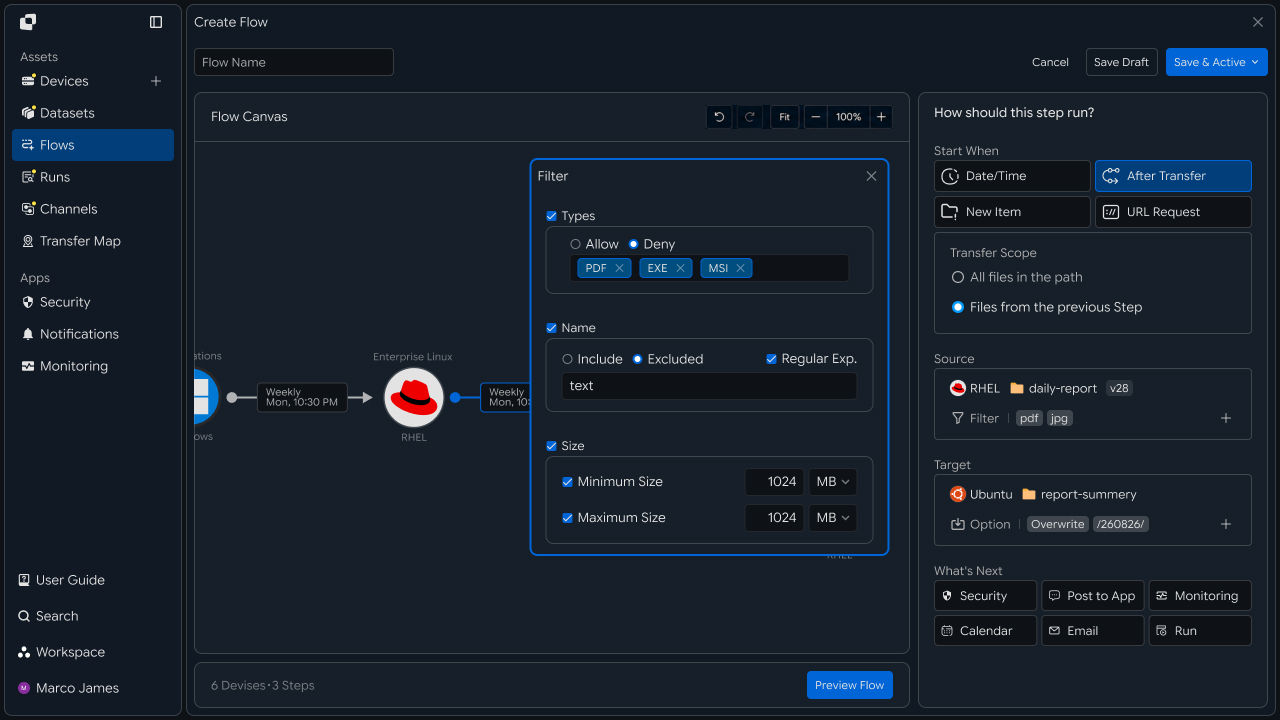
The main execution methods are as follows.
Date/Time: Deploy at the specified date and time
After Transfer: Deploy after the previous file task is complete
Sync: Deploy based on file creation or changes
URL Request: Deploy in response to an external request
When needed, select deployment files based on file name, extension, or path.
File Policy
Configure file handling rules for destination environments
When deploying files to multiple Targets, you can apply the same file handling rules across each destination environment.
Use File Conflict Handling to define what happens when a file with the same name already exists.
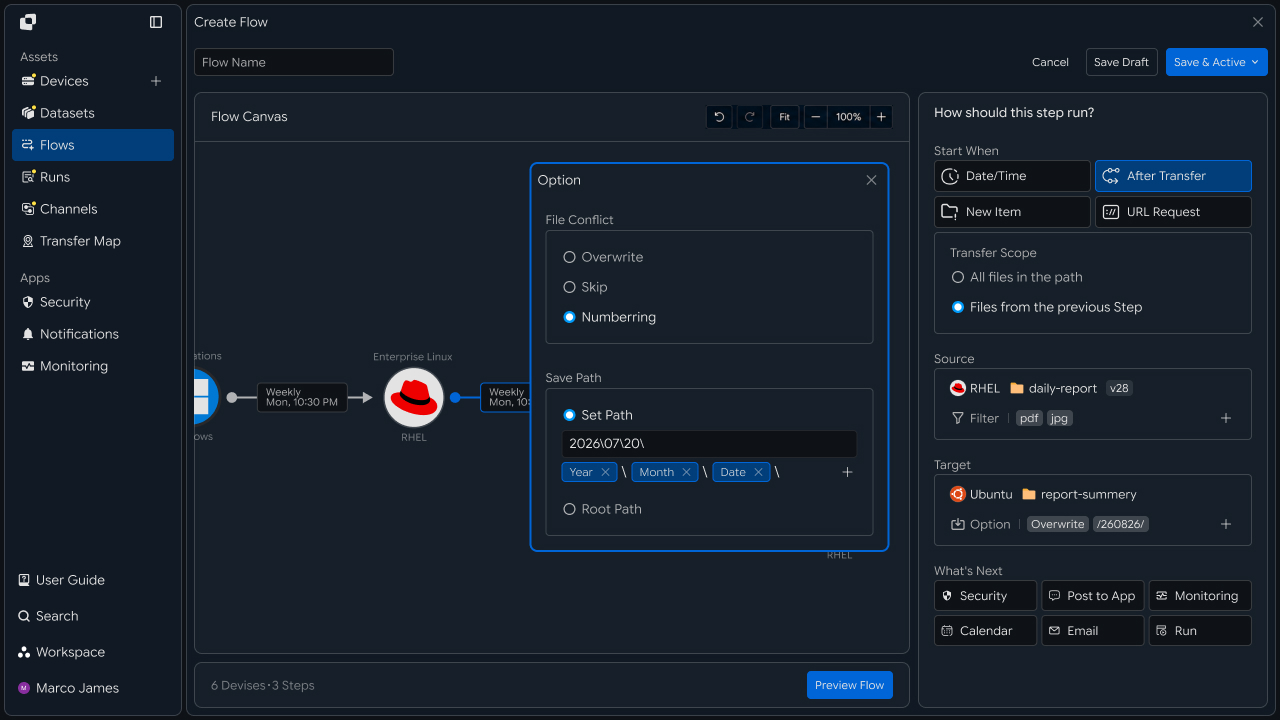
| Handling Method | Result |
|---|---|
| Overwrite | Apply the deployed file as the current file state |
| Skip | Keep the existing file at the destination |
| Numbering | Add a number so both files can be managed together |
Applying file handling policies to the Flow lets you manage files consistently across multiple Targets.
Deployment Configuration
Automatically apply a single file to multiple targets
After configuring the Source and Targets, execution conditions, and file policy, build the complete deployment flow as a single Flow.
A file prepared at one Source is branched and transferred to multiple Targets according to the configured conditions.
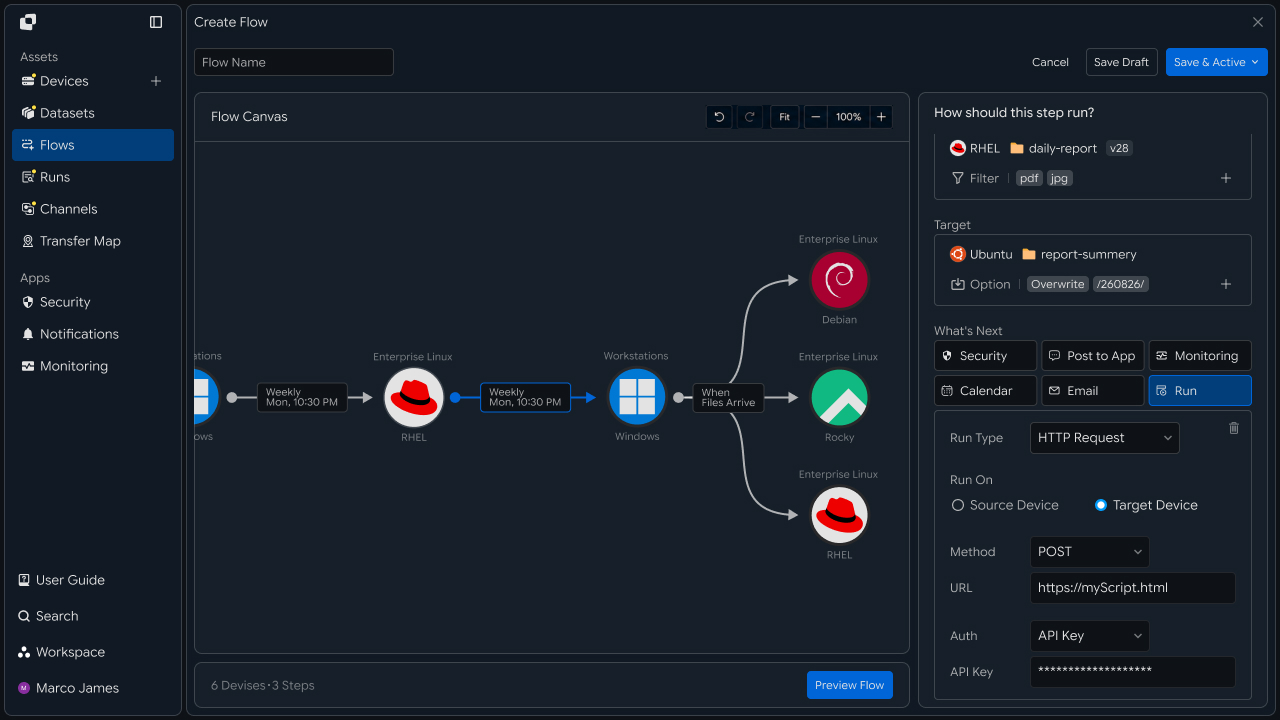
                 ┌── Team A
                 │
Source File ─────┼── Team B
                 │
                 ├── Branch Office
                 │
                 ├── Server Cluster
                 │
                 └── Device Group
You can apply separate file paths and handling conditions to each Target, allowing one file to be deployed according to the operating requirements of multiple environments.
Automation Integration
Connect deployment results to notifications and the next system
When file deployment is complete, you can run the next Flow or connect to external services to automate the work that follows deployment.
For example, send deployment results to a collaboration tool, create follow-up tasks in a work management system, or configure a monitoring environment to track deployment status.
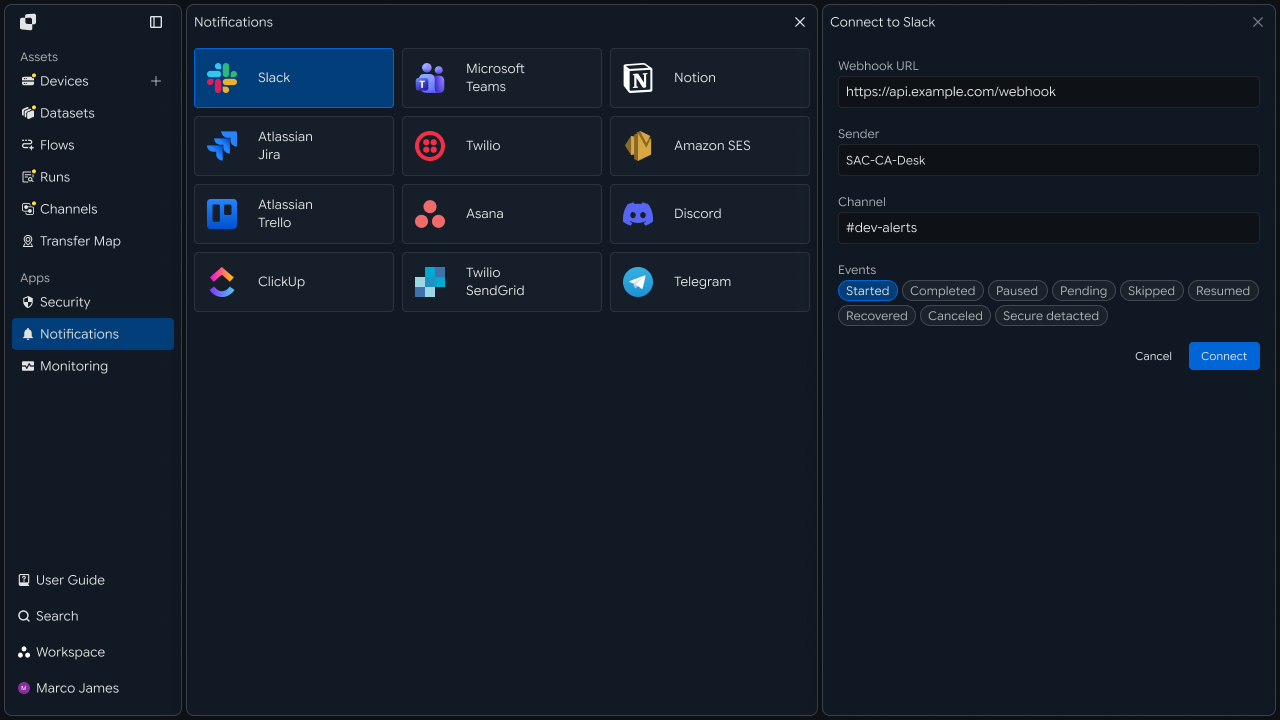
File Preparation
    ↓

Multi-Target Deployment
    ↓

Check Deployment Results
    ↓

Send Notification or Event
    ↓

Run Next Flow
Connections to external services can be extended as follows.
| Integration Area | Use |
|---|---|
| Business · Collaboration | Deployment completion information and notifications to responsible users |
| Work Management | Create follow-up tasks and connect business workflows |
| Monitoring | Review deployment status and operational information |
| Security | Manage events and status in the deployment environment |
Verify Results
Manage overall deployment and target-specific execution results
When a deployment task runs, review the overall deployment status and processing results for each Target in Runs.
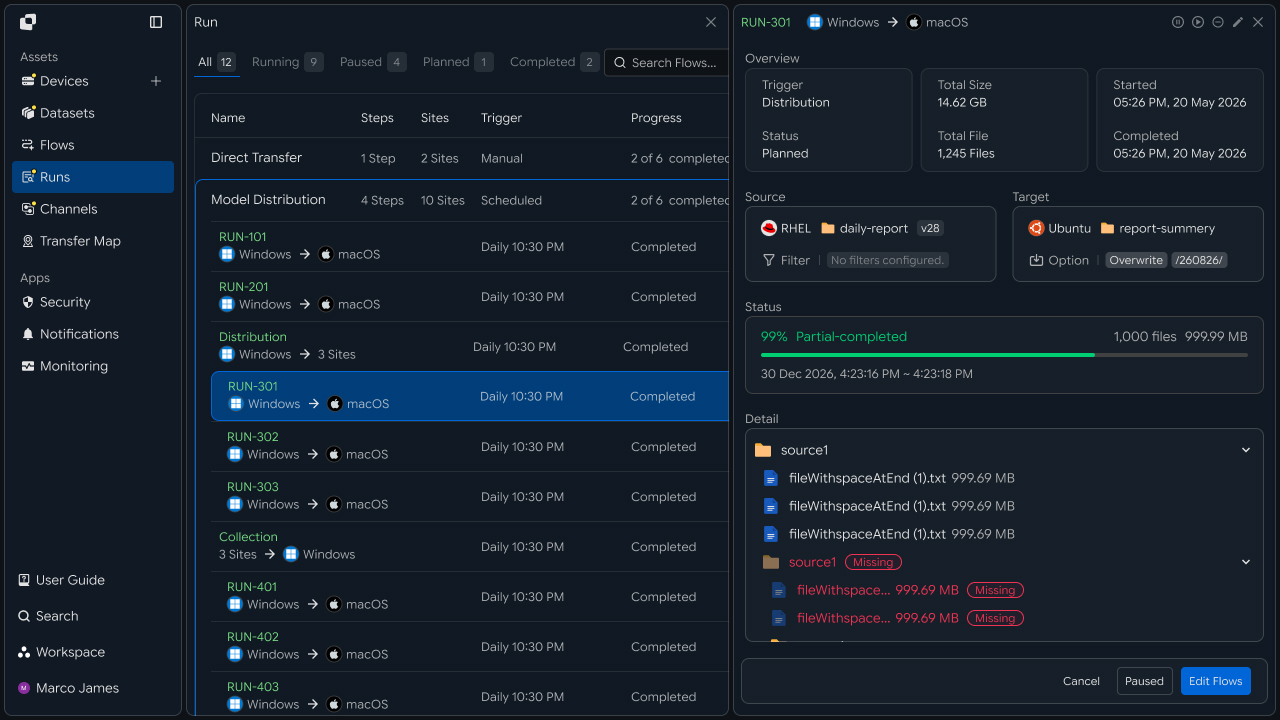
Review the following information in each Run.
| Review Item | Details |
|---|---|
| Source | Deployment file and original location |
| Target | System or device receiving the file |
| Total Files | Total number of files deployed |
| Total Size | Total deployment size |
| Progress | Current deployment progress |
| Status | Task status |
| Started | Deployment start time |
| Completed | Deployment completion time |
Operators can review the overall deployment flow while managing execution status and processing results for each Target.
Incident Response
Check target-specific status and reprocess the required deployment tasks
When a target requires attention during deployment to multiple Targets, check its status using the Run details and execution records.
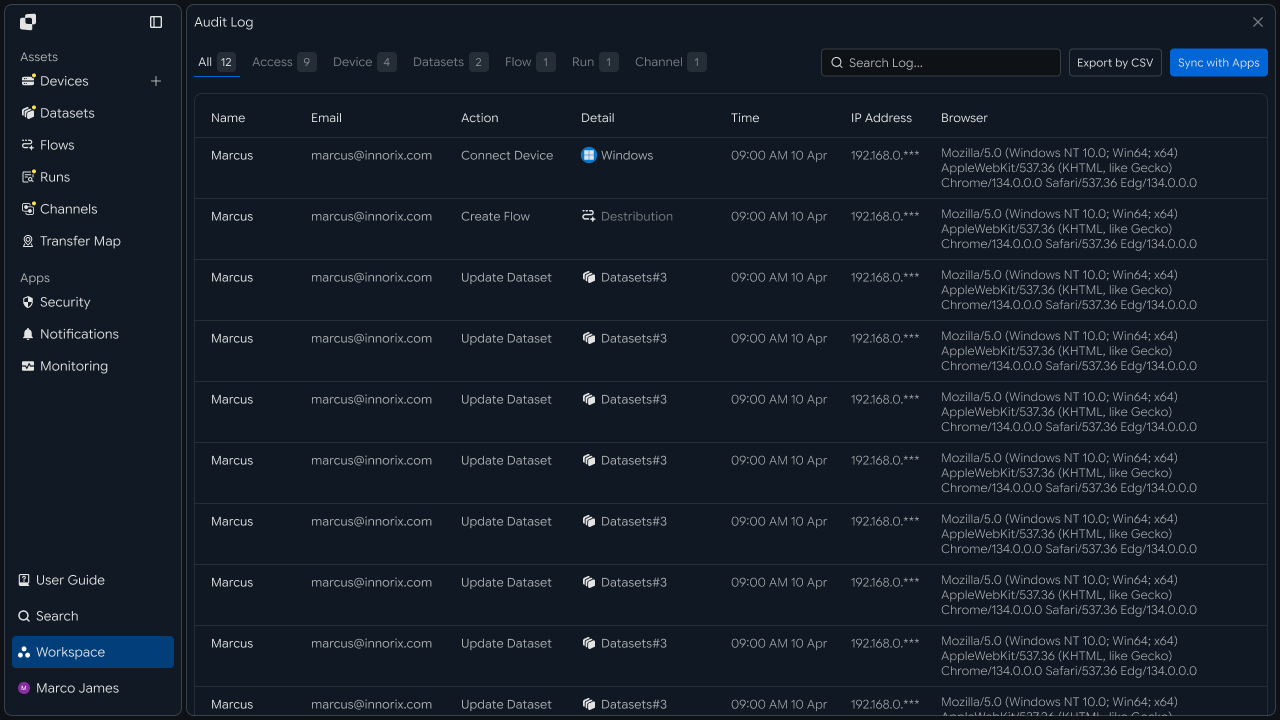
The review flow can be configured as follows.
Review Deployment Run
    ↓

Check Status by Target
    ↓

Review Detailed Execution Information
    ↓

Check Connection, Path, and Permissions
    ↓

Adjust Environment
    ↓

Rerun by Target
    ↓

Review New Run
| Review Item | Details |
|---|---|
| Device Connection | Connection status of the Target system |
| Destination Path | Location where the file is applied |
| Access Permissions | File read and write permissions |
| File Status | Information about the file being deployed |
| Execution Records | Run and Audit Log |
After the review is complete, rerun the required Target and confirm the deployment result through the new Run.