Dramatic reduction of engineering costs and time for file transfer preparation
INNORIX significantly reduces the complex procedures and time required for file transfer preparation, drastically lowering engineering costs and maximizing the efficiency of the preparation process to accelerate business speed.


Transfer of complex flows
In industrial environments, various systems and devices are interconnected, making large-scale and complex file transfer flows essential. These file transfers involve numerous steps, with repeated processes of distributing and collecting data among multiple devices. Handling this manually increases time consumption and the risk of errors, which can affect system stability.
Exacoola fully automates these complex and large-scale transfer flows, ensuring accurate real-time file transfer, maximizing operational efficiency, and playing a crucial role in minimizing errors.

Urgent need for improvement in server-to-server file transfer
Today, most companies operate numerous servers, which store massive files and vast amounts of data that are difficult to handle with ordinary workstations. Additionally, as various types of large files are continuously generated, effectively transferring this data has become increasingly important.
However, traditional file transfer methods not only take excessively long to handle these large and voluminous files but also show limitations in terms of reliability. For efficient business operations, fast and secure file transfer between servers and across various devices is essential. Yet, many companies lack adequate preparation for this, facing increasingly difficult challenges to resolve.
Complexity increases significantly as devices multiply
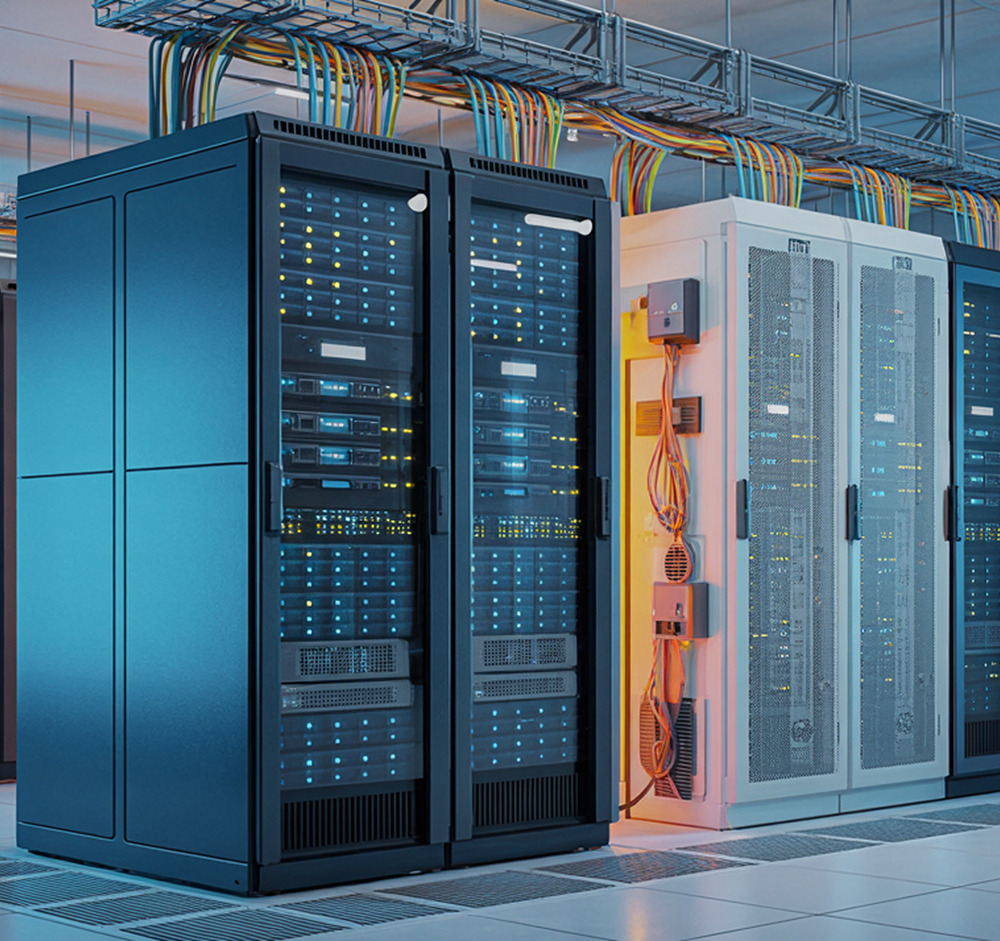
In real-world work environments, it is common to need simultaneous file transfers among hundreds of servers, workstations, edge computers, and various cloud virtualized devices. Such tasks place a heavy burden and stress on the responsible personnel and can also lead to substantial time and cost losses for the company.
While experienced staff may be able to resolve issues a few times through perseverance, this approach clearly has limitations when it comes to flexibly handling the repetitive and ongoing nature of file transfer operations.
Facing limitations in file transfer between devices
In the absence of suitable solutions for smooth file transfer between devices, even the simple task of transferring 10,000 files is far from easy. In reality, corporate servers generate or consolidate hundreds of thousands to millions of new files daily, making the transfer challenge increasingly complex.
Temporary overloads on servers or devices can cause response delays that quickly lead to transfer failures, while natural network disruptions or data corruption further worsen these issues. The larger the file size, the greater the quantity, and the higher the transfer frequency, the exponentially higher the risk of loss or errors during transfer, often resulting in failures.
Currently, existing methods such as system synchronization commands or FTP remain virtually the only options, but these approaches are often inefficient and unstable over long-distance transfers. This has ironically led many companies to find physically shipping storage devices via courier more practical. Relying excessively on engineers’ experience and manual effort to overcome the instability of device-to-device file transfers is far from aligned with the efficiency and sustainable operations that companies strive for.
Limitations of system command performance
The business environment today is vastly different from when system commands were originally developed. Yet many companies, unable to find suitable alternatives, still rely heavily on these traditional methods. As a result, engineers are often forced to search the internet for command syntax and usage, troubleshoot issues manually, and endure the overall inefficiency of this outdated approach. Experienced system engineers are well aware of the instability and hassle this method entails.
However, no matter how skilled the engineer may be, command-line-based file transfer methods fail to fully utilize device performance and available network bandwidth. This leads to significantly slower speeds during large file transfers and ultimately disappointing outcomes. In particular, the sharp decline in transfer speed as the number of files increases has become an accepted limitation in many environments.




Limitations of FTP-based file transfer
Although FTP is commonly used for file transfers between devices due to its name, its actual usage is highly inefficient. One device must run an FTP server, while the other must manually connect and issue commands, followed by checking transfer results making the process both cumbersome and impractical. While security concerns appear to be partially addressed through SFTP, the transfer speed becomes even slower, and additional steps like port configuration and authentication on each device still leave the system vulnerable.
Just like command-line-based methods, FTP and SFTP suffer from usability and management difficulties, as well as inefficient transfer speeds. They also lack automated processing features such as "hot folder" detection that can respond to file changes in real time resulting in repetitive, time-consuming tasks. Moreover, these methods not only deliver poor performance but also fail to guarantee transfer completeness, ultimately compromising both operational efficiency and reliability.
Sync and backup solutions
The reason companies are willing to bear high costs to adopt certain solutions for critical tasks is the importance of backup and synchronization, along with the operational convenience they provide. While these solutions can help mitigate the limitations and instability of basic system command-based methods, their complex and often confusing configuration options create new usability barriers.
Most traditional solutions were designed long ago and have become increasingly complicated over time due to continuous feature additions. Furthermore, because these systems focus solely on backup and synchronization, they often deliver slower file transfer speeds sometimes even slower than basic system commands or FTP. As a result, they are no longer practical alternatives in today’s enterprise environments, where the ability to transfer large volumes of data quickly and reliably is essential.
Physically moving storage devices
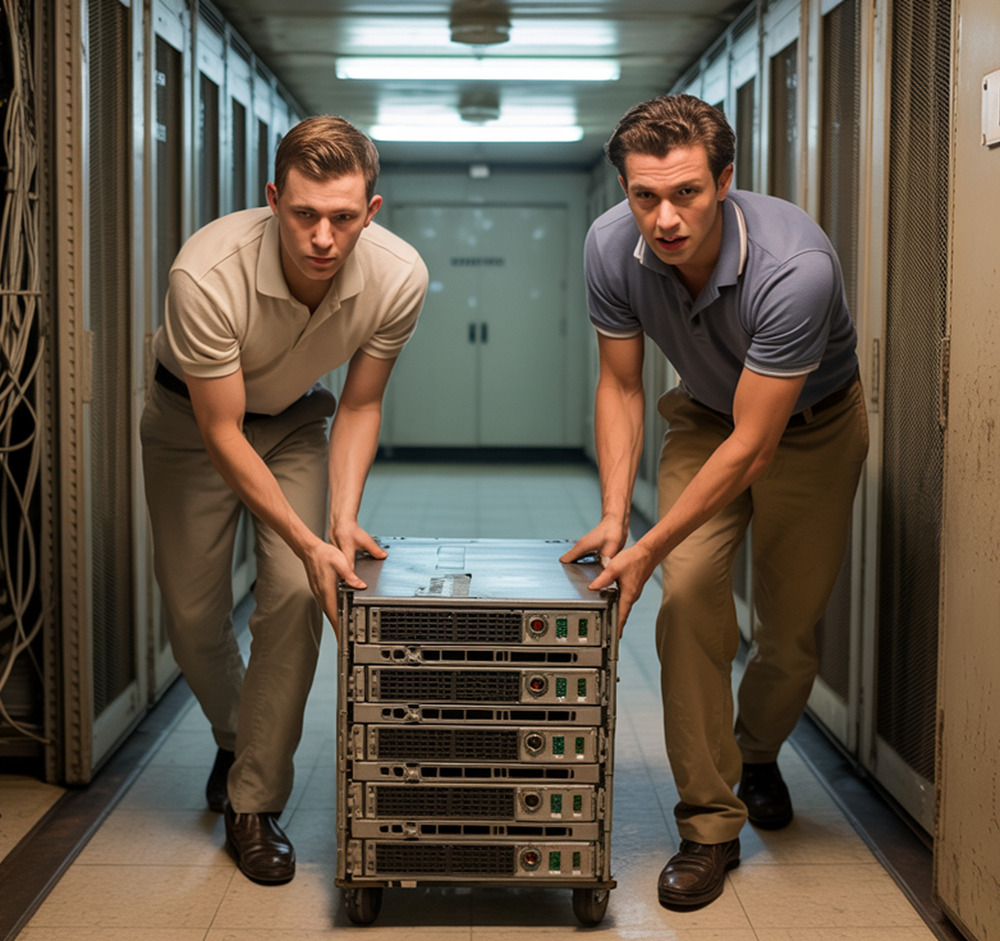
System engineers often find themselves forced to rely on traditional methods when transferring files between servers. Even when they endure the inconvenience and overcome issues through repeated trial and error, the slow transfer speeds ultimately lead to significant frustration.
In many cases, physically transporting the storage device itself proves to be faster than performing the transfer especially over long distances, where the difference becomes even more pronounced. As a result, numerous companies opt to ship storage media via logistics services, not only domestically but also internationally, in an attempt to avoid the complexities of large file transfers.
However, regardless of speed or cost, this approach directly contradicts enterprise efforts to strengthen data security. It exposes critical data to serious security threats and the risk of loss, making it an extremely dangerous alternative.

Changing perceptions of file transfers across devices
Traditional methods of file transfers between devices often required extensive preparation and repetitive tasks, yet still delivered slow speeds and unsatisfactory results. As a result, many companies have limited device-to-device file transfers to only the most essential situations.
Exacoola fundamentally transforms this perception. Companies are no longer bound by the limitations of traditional file transfers and can now plan to transfer more files across more devices whenever needed freely and efficiently.
Moreover, system engineers can hand over complex and time-consuming file transfer tasks to Exacoola, allowing them to focus on more critical work. The real-time transfer monitoring capabilities provided by Exacoola enhance operational efficiency and offer companies a clear opportunity for workflow innovation.
Download Exacoola brochure
Discover Exacoola, the solution that transfers large files between numerous devices faster and more reliably than ever. It optimizes and automates file transfers across diverse environments, including cloud virtualization devices, servers, workstations, object storage, and edge computers. Download the brochure now and experience an efficient file transfer environment.
Exacoola subscription and purchase inquiries
Exacoola is an enterprise transfer solution that optimizes and automates large file transfers across various IT infrastructures, including cloud virtualization devices, servers, workstations, object storage, and edge devices. We provide customized guidance on subscription models and implementation plans tailored to your business environment.